
Table of Contents
Home Energy Monitor vs. Smart Meter: Which One Actually Lowers the Bill?
A smart meter is often treated like a home energy monitor, but the two are not the same tool. One is mainly a utility billing and interval-data device. The other is usually a homeowner-facing system that tries to show what is happening inside the house.
Neither one lowers the bill automatically. The savings come from using the information to change when and how electricity is used.
What Each Tool Is Good At
A smart meter measures electricity flow for the utility and can support interval billing, time-of-use pricing, and outage detection. A home energy monitor gives the household a more detailed look at consumption, sometimes down to circuits or appliances.
The U.S. Energy Information Administration notes that electricity rates may depend not only on the type of customer and how much electricity is used, but also on when it is used. That is the key connection between monitoring and savings.
A simple comparison helps:
| Tool | Best use | Main limit |
| Smart meter | Utility-grade usage and billing data | Often too broad for load decisions |
| Home monitor | Real-time insight into household loads | Still needs action |
| Energy management | Scheduling and controlling flexible loads | Requires compatible equipment |
The practical gap is timing. A smart meter may confirm that 18 kWh were used during a peak window. That is useful after the fact, but it does not explain whether the culprit was EV charging, HVAC recovery, cooking, laundry, or all of them at once.
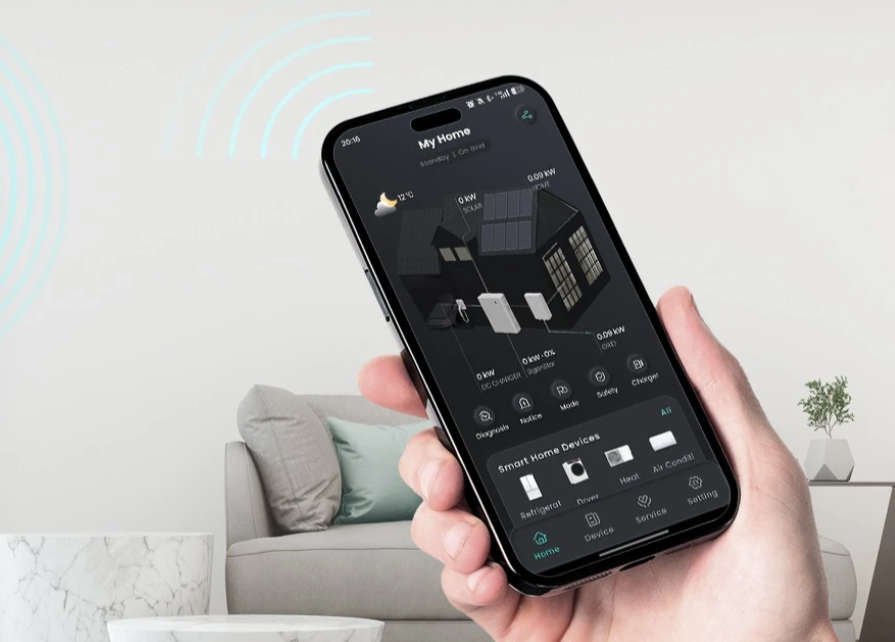
A smart home energy management system sits closer to the third row. It is designed to connect insight with control, especially when the home has solar, storage, or smart loads.
The Bill Changes When Timing Changes
A bill does not care that a homeowner noticed a graph. It changes when the dishwasher, EV charger, water heater, or battery behaves differently. That could mean running flexible loads when solar is available, avoiding peak pricing, or preserving backup capacity during outage season.
The difference is especially clear under time-of-use rates. If peak power is expensive from late afternoon into evening, a smart meter can prove the home used energy during that window. A monitor can show which loads were responsible. A management system can help move or reduce those loads.
This does not require a complicated lifestyle. A few large loads usually do most of the damage. Moving an EV charge, a water-heater cycle, or a pool pump can matter more than chasing every phone charger in the house.
Look for Control, Not Just Curiosity
The better question is not smart meter or home monitor. It is whether the home has enough control to act on the data. A solar home without a battery may shift laundry into the day. A battery home may charge from solar and discharge after sunset. An EV home may delay charging until lower-cost hours.
Sigenergy’s Smart Home energy control solution is a natural landing point for that discussion because it focuses on smart loads, operating modes, and app-based control rather than passive reporting.
A smart meter can tell the utility what happened. A good home energy setup helps the homeowner decide what should happen next.






Leave A Comment